

Insurance bad faith occurs when an insurer unreasonably denies or delays a valid claim, leaving policyholders to face financial ruin without the coverage they paid for. In Missouri, this legal concept is not merely a breach of contract but a potential tort that allows victims to seek significant damages beyond the original policy limits. Recent legal trends and high-stakes verdicts demonstrate that insurance companies face severe consequences when they prioritize profit over their contractual obligations. Understanding the precise legal steps required to hold an insurer accountable is critical for anyone facing a denied claim in the state.
Understanding Missouri Bad Faith Law
Before initiating any legal action, it is essential to define the legal framework governing insurance disputes in your jurisdiction. Bad faith insurance is a legal doctrine that holds insurers accountable for unreasonable conduct when handling claims. In Missouri, this doctrine is well-established through case law that requires insurers to act in good faith and with due diligence.
Missouri courts have long recognized that an insurance policy is a contract of adhesion, meaning the insurer drafts the terms and the consumer has little power to negotiate. Consequently, the law imposes a duty on the insurer to treat the claim fairly. If an insurer denies a claim without a reasonable investigation or bases the denial on a misinterpretation of the policy language, they may be liable for bad faith.
This legal standard is particularly relevant in catastrophic injury cases where the stakes are highest. When a firm like Presley and Presley Trial Lawyers handles these matters, they look for specific indicators of bad faith, such as failing to communicate with the claimant, refusing to accept liability without a valid reason, or offering significantly less than the claim is worth without justification.
Documenting the Denial and Evidence
The first practical step in pursuing a bad faith claim is the meticulous documentation of the insurer's conduct. Insurance companies often rely on the claimant's lack of record-keeping to justify their denials. Therefore, you must create a comprehensive file that tracks every interaction.
Collecting Policy Documents
Begin by obtaining a complete copy of your insurance policy, including all endorsements and riders. You must understand exactly what coverage you purchased. If the insurer claims your loss is excluded, you need to prove that the exclusion does not apply to your specific situation. This often requires a detailed comparison of the policy language against the facts of the loss.
Tracking Communications
Keep a log of every phone call, email, and letter exchanged with the insurance adjuster. Note the date, time, and the name of the representative you spoke with. If the adjuster fails to return calls or delays responding to your inquiries, document these instances. Unreasonable delay in claim processing is a primary indicator of bad faith in Missouri.
Furthermore, gather all medical records, repair estimates, and police reports related to the incident. If the insurer disputes the severity of your injuries or the cost of repairs, you need independent evidence to counter their position. This evidence forms the foundation of your argument that the denial was not based on a legitimate investigation.
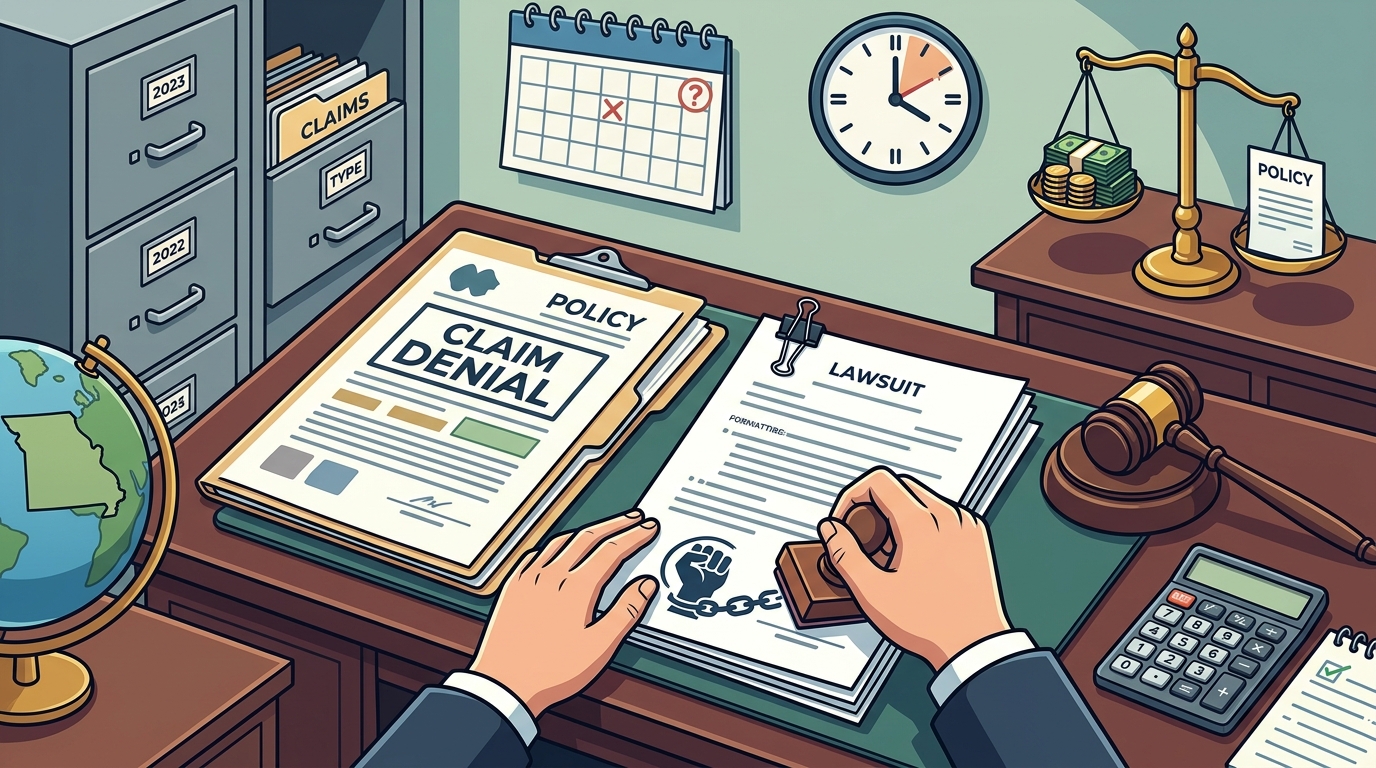
The Formal Appeal Process
Before filing a lawsuit, Missouri law often requires or strongly encourages a formal appeal within the insurance company's internal system. This step is crucial because it demonstrates to the court that you exhausted all reasonable avenues to resolve the dispute.
Submitting a Formal Demand
A formal demand letter should be sent to the insurance company's claims department. This letter must clearly state the facts of the loss, the applicable policy provisions, and the legal basis for your claim. It should also outline the damages you have suffered, including medical bills, lost wages, and pain and suffering.
When drafting this demand, it is vital to be precise and factual. Avoid emotional language and focus on the contractual obligations of the insurer. If the insurer continues to deny the claim after receiving this formal demand, their refusal becomes stronger evidence of bad faith in subsequent litigation.
Internal Review
Once the demand is submitted, the insurance company is typically required to conduct an internal review. This review should be conducted by someone other than the original adjuster to ensure impartiality. If the internal review upholds the denial without a thorough re-examination of the evidence, this failure can be cited as further proof of bad faith.
Litigation Strategies and Expert Analysis
If the internal appeal fails, the next step is to initiate litigation. Bad faith claims are complex and require a strategic approach that goes beyond standard personal injury law. The focus shifts from proving the original injury to proving the insurer's misconduct.
Expert Witness Testimony
In many bad faith cases, expert witnesses are necessary to explain the standard of care expected of insurers. These experts can testify about industry practices and how the insurer's actions deviated from those standards. For example, in cases involving catastrophic injuries, medical experts may be needed to validate the necessity of treatments that the insurer denied.
Additionally, forensic accountants may be employed to calculate the full extent of economic damages, ensuring that no financial loss is overlooked. This comprehensive approach ensures that the claim reflects the true cost of the insurer's bad faith conduct.
Proving the "Why"
To succeed in a bad faith claim, you must prove that the insurer knew or should have known that the claim was valid but still denied it. This often involves uncovering internal emails or memos that reveal the insurer's true motives. If the insurer prioritized saving money over honoring the contract, this evidence can be devastating in court.
Our firm has extensive experience in insurance bad faith litigation, utilizing deep resources to uncover the technical and scientific evidence that proves misconduct. We understand that these cases require not just legal skill but also the financial resources to fight against well-funded insurance companies.
Types of Damages Available
One of the most significant aspects of a bad faith claim is the potential for damages beyond the original policy limits. In Missouri, if you can prove bad faith, you may be entitled to recover more than the amount of your insurance coverage.
| Type of Damages | Description | Example Scenario |
|---|---|---|
| Compensatory Damages | Covers the original loss, including medical bills and property damage. | Reimbursement for a $500,000 medical bill denied by the insurer. |
| Consequential Damages | Covers additional losses caused by the bad faith, such as lost income or emotional distress. | Lost wages due to delayed medical treatment. |
| Punitive Damages | Designed to punish the insurer for egregious conduct and deter future bad faith. | Additional millions awarded to punish a company for hiding evidence. |
| Attorney Fees | Reimbursement for the legal costs incurred to fight the bad faith claim. | Coverage of legal fees in high-stakes litigation. |
Punitive damages are particularly important in bad faith cases. They serve as a deterrent, signaling to insurance companies that unethical behavior will have severe financial consequences. In cases involving wrongful death or severe permanent disability, the emotional toll on the family is immense, and punitive damages help acknowledge that suffering.
Key Takeaways
- Definition of Bad Faith: Bad faith insurance is a legal doctrine that holds insurers accountable for unreasonable conduct when handling claims.
- Documentation is Critical: Keep a detailed log of all communications and gather all policy documents to prove the insurer's negligence.
- Formal Demand Required: Submit a formal demand letter to trigger the insurer's internal review process before filing suit.
- Expert Witnesses: Utilize medical and financial experts to validate the extent of damages and the insurer's deviation from industry standards.
- Beyond Policy Limits: Successful bad faith claims can result in verdicts exceeding the original insurance policy limits.
- Punitive Damages: Punitive damages are available to punish insurers for egregious misconduct and deter future behavior.
- Specialized Counsel: Complex bad faith cases require attorneys with specific experience in insurance litigation and catastrophic injury.
Frequently Asked Questions
What is the statute of limitations for bad faith insurance claims in Missouri?
In Missouri, the statute of limitations for breach of contract is typically five years. However, bad faith claims may fall under tort laws, which can have different time limits. It is crucial to consult with an attorney immediately to ensure your claim is filed within the appropriate timeframe.
Can I sue my insurance company for bad faith if I have a car accident claim?
Yes, you can sue your insurance company for bad faith if they unreasonably deny or delay your car accident claim. This applies to both first-party claims (your own policy) and third-party claims (liability coverage) in certain circumstances.
What damages can I recover in a bad faith lawsuit?
You may recover compensatory damages for your original loss, consequential damages for additional losses caused by the delay, punitive damages to punish the insurer, and attorney fees. In some cases, verdicts can exceed the policy limits.
How do I prove that an insurer acted in bad faith?
Proving bad faith requires showing that the insurer knew or should have known the claim was valid but denied it anyway. This is often done through documentation of internal communications, expert testimony on industry standards, and evidence of unreasonable delays.
Do I need a lawyer to file a bad faith claim?
While it is possible to file a claim without a lawyer, bad faith cases are highly complex and require specialized legal knowledge. An experienced attorney can help you navigate the legal process, gather necessary evidence, and negotiate with the insurer effectively.
What is the difference between a breach of contract and bad faith?
A breach of contract occurs when one party fails to fulfill their obligations under the contract. Bad faith is a more severe tort that involves dishonesty, unfairness, or unreasonable conduct in the handling of the claim. Bad faith claims can result in additional damages not available in simple breach of contract cases.
How long does a bad faith lawsuit take?
The duration of a bad faith lawsuit varies depending on the complexity of the case and the willingness of the insurer to negotiate. Some cases may settle within a year, while others may take several years to reach trial. Our firm is known for taking on tough opponents to achieve the best possible outcome.
Contact Our Firm
If you are facing an insurance company that is denying your claim or delaying your payment, you do not have to face them alone. Presley and Presley Trial Lawyers has over 30 years of experience fighting for clients in Missouri and Kansas. We specialize in catastrophic injury and wrongful death cases, including complex insurance bad faith claims.
Our team is dedicated to providing attentive, compassionate representation. We understand the financial and emotional toll that insurance disputes can take on families. Let us help you hold the insurer accountable and secure the compensation you deserve.
Contact us today to schedule a free consultation. Our office is located at 4801 Main Street, Suite 375, Kansas City, MO 64112. You can also call us at (816) 931-4611.