

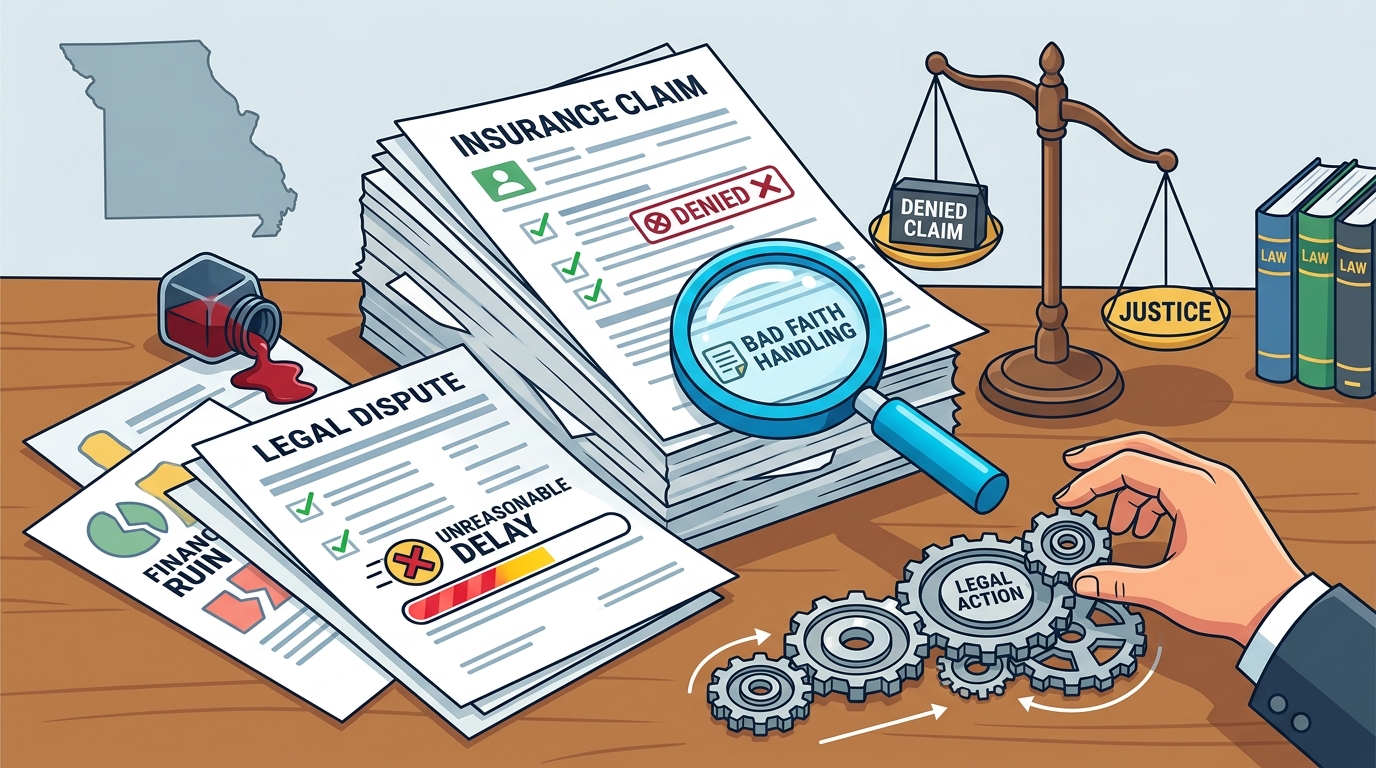
Insurance bad faith occurs when an insurer unreasonably denies or delays a valid claim, leaving policyholders to face financial ruin without the coverage they paid for. According to recent industry data, millions of consumers face claim disputes annually, with a significant percentage involving allegations of unfair handling practices. When an insurance company breaches its duty of good faith, the legal landscape shifts from a simple contract dispute to a complex litigation matter requiring specialized expertise.
Understanding Missouri Bad Faith Law
Before initiating any legal action, it is critical to understand the specific legal framework governing insurance disputes in Missouri. Insurance bad faith is not merely a disagreement over the value of a claim. It is a legal cause of action that arises when an insurer fails to fulfill its contractual obligations without a reasonable justification.
Insurance bad faith is a legal claim where an insurer acts unreasonably in handling a policyholder's claim. This definition distinguishes it from a simple breach of contract. In Missouri, courts have recognized that insurers hold a position of power and trust. When that trust is violated, the law provides remedies that go beyond the original policy limits.
Missouri law requires insurers to act in good faith and deal fairly with their policyholders. This duty exists regardless of whether the policy is for auto, home, or commercial insurance. If an insurer denies a claim based on a flimsy interpretation of the policy language, or if they delay payment without a valid investigation, they may be liable for bad faith. The burden of proof often shifts to the insurer to demonstrate that their denial was reasonable and based on a thorough investigation.
Understanding the distinction between a legitimate denial and bad faith is the first step. A denial based on clear policy exclusions is not bad faith. However, a denial based on a lack of investigation or a misapplication of facts is a strong indicator of bad faith. Presley and Presley Trial Lawyers specializes in identifying these subtle but critical distinctions in insurance bad faith cases.
Documenting the Breach of Duty
The foundation of any successful bad faith claim is the evidence. Insurance companies maintain extensive records of their internal decision-making processes. Policyholders must gather and preserve all communications related to the claim.
Collecting Communication Records
Every email, letter, and recorded phone call with the insurance adjuster is vital. These documents often reveal inconsistencies in the insurer's narrative. If an adjuster claims to have reviewed a document that was never actually examined, that discrepancy is powerful evidence. Keep a detailed log of every interaction, including the date, time, and the name of the representative you spoke with.
Preserving Medical and Repair Documentation
For bodily injury or property damage claims, the physical evidence is equally important. Medical records must clearly link the injuries to the incident in question. Repair estimates should be obtained from independent, reputable contractors. If the insurer demands a specific repair method that is inferior to industry standards, document that request and your refusal.
Failure to document these interactions can weaken your position. Insurance companies often rely on the policyholder's lack of record-keeping to justify their delays. By maintaining a comprehensive file, you create a timeline that highlights the insurer's unreasonable behavior. This documentation is essential when filing a catastrophic injury claim where the stakes are highest.
The Formal Demand Process
Before filing a lawsuit, it is often necessary to send a formal demand letter. This step serves as a final opportunity for the insurer to resolve the dispute without litigation. It also establishes a clear record of your willingness to settle and the insurer's refusal to do so reasonably.
Structuring the Demand Letter
A bad faith demand letter must be precise and compelling. It should outline the facts of the claim, the policy provisions that support coverage, and the specific reasons why the insurer's denial is unreasonable. Include copies of key documents, such as the policy, the denial letter, and your supporting evidence.
The letter should also detail the damages suffered due to the delay or denial. This includes not just the claim amount, but also any financial losses incurred because of the lack of payment. For example, if a business cannot operate due to an unpaid property claim, the lost revenue is a direct result of the bad faith.
Setting a Deadline
Include a reasonable deadline for the insurer to respond. This creates urgency and demonstrates that you are serious about pursuing legal action. If the insurer ignores the letter or offers an unreasonably low settlement, it strengthens your case for litigation. This process is a critical component of car accident litigation where insurance companies may attempt to lowball victims.
Litigation Strategies and Damages
If the demand letter fails to produce a fair resolution, filing a lawsuit becomes necessary. Litigation in bad faith cases is complex and requires a deep understanding of both contract law and tort law.
Compensatory and Punitive Damages
In Missouri, a successful bad faith claim can result in more than just the original claim amount. Compensatory damages cover the actual losses, including the claim value, interest, and emotional distress. However, the most significant aspect of bad faith litigation is the potential for punitive damages.
Punitive damages are awarded to punish the insurer for egregious conduct and to deter similar behavior in the future. These damages can far exceed the original policy limits. To recover punitive damages, you must prove that the insurer acted with malice, fraud, or gross negligence. This is a high bar, but it is achievable with strong evidence of unreasonable conduct.
Expert Witnesses and Investigations
Bad faith cases often require expert witnesses to testify on industry standards. These experts can explain how a reasonable insurer would have handled the claim. They can also critique the insurer's investigation process, highlighting gaps or biases. Presley and Presley Trial Lawyers has the resources to engage these experts and build a robust case. Our track record includes securing record-setting verdicts in complex insurance disputes.
Choosing Specialized Counsel
Not all personal injury lawyers are equipped to handle bad faith insurance claims. These cases require attorneys who understand the intricacies of insurance law and have the resources to fight large insurance companies. General practitioners may lack the specific experience needed to navigate the technical aspects of bad faith litigation.
Experience with High-Stakes Claims
Look for a firm that has a history of taking on insurance companies. Firms that specialize in catastrophic injury and wrongful death cases are often better positioned to handle bad faith claims. They understand the long-term financial impact of denied claims and know how to calculate the full scope of damages.
Contingency Fee Structures
Many bad faith cases are handled on a contingency fee basis. This means you do not pay upfront legal fees. Instead, your attorney takes a percentage of the recovery. This structure aligns the interests of the attorney and the client. It also ensures that you have access to top-tier legal representation regardless of your current financial situation. Learn more about our contingency fee approach to ensure there are no financial barriers to justice.
Key Takeaways
- Bad Faith Definition: Insurance bad faith is a legal claim where an insurer acts unreasonably in handling a policyholder's claim, distinct from a simple breach of contract.
- Missouri Law: Missouri insurers have a legal duty to act in good faith and deal fairly with policyholders, regardless of the insurance type.
- Documentation: Collecting all communications and preserving medical or repair records is essential to proving the insurer's unreasonable conduct.
- Demand Letter: A formal demand letter outlines the claim's merits and sets a deadline for resolution, establishing a record for potential litigation.
- Damages: Successful bad faith claims can recover compensatory damages, including emotional distress, and potentially punitive damages for egregious conduct.
- Expert Support: Expert witnesses are often required to testify on industry standards and critique the insurer's investigation process.
- Specialized Counsel: Choosing a firm with experience in high-stakes insurance disputes is critical for maximizing recovery and navigating complex litigation.
Frequently Asked Questions
What is the statute of limitations for bad faith claims in Missouri?
In Missouri, the statute of limitations for breach of contract claims is typically five years. However, bad faith tort claims may have different deadlines depending on the specific circumstances and when the damage was discovered. It is crucial to consult with an attorney immediately to ensure your claim is filed within the legal timeframe.
Can I sue my insurance company for bad faith if I have an auto policy?
Yes, you can pursue a bad faith claim against your auto insurance provider if they unreasonably deny or delay your claim. Missouri law applies to all types of insurance policies, including auto, home, and commercial. The key is proving that the denial was not based on a reasonable interpretation of the policy.
What damages can I recover in a bad faith lawsuit?
You may recover the original claim amount, interest, and compensatory damages for emotional distress and financial losses. In cases of egregious conduct, you may also be eligible for punitive damages, which are designed to punish the insurer and deter future misconduct.
How long does a bad faith lawsuit take?
The timeline varies significantly based on the complexity of the case and the insurer's willingness to settle. Some cases resolve during the demand phase, while others may take months or years to reach trial. Presley and Presley Trial Lawyers works efficiently to move cases forward while ensuring thorough preparation.
Do I need to hire a lawyer for a bad faith claim?
While it is possible to file a claim without an attorney, bad faith litigation is highly complex. Insurance companies have extensive legal resources, and having specialized counsel levels the playing field. An experienced attorney can navigate the legal nuances and maximize your recovery.
What is the difference between bad faith and breach of contract?
A breach of contract occurs when one party fails to fulfill their contractual obligations. Bad faith is a tort claim that arises when the insurer's failure to perform is unreasonable, dishonest, or without proper cause. Bad faith claims often carry the potential for punitive damages, which are not available in standard breach of contract cases.
How does Presley and Presley Trial Lawyers handle bad faith cases?
We focus on catastrophic injury and complex liability cases. Our team investigates the insurer's conduct thoroughly, engages expert witnesses, and litigates aggressively to secure fair compensation. We handle cases on a contingency fee basis, ensuring you pay no upfront costs.
Contact Presley and Presley Trial Lawyers
If you believe your insurance company has acted in bad faith, do not wait. The evidence of unreasonable conduct can disappear over time, and the statute of limitations may expire. Presley and Presley Trial Lawyers is dedicated to holding insurance companies accountable. Our team has recovered hundreds of millions of dollars for clients facing similar challenges.
Contact us today for a free consultation. We will review your case, explain your legal options, and fight for the compensation you deserve. Visit our contact page to schedule your appointment or call us directly at (816) 931-4611. Let us help you navigate the complexities of bad faith insurance claims with confidence and expertise.