

Losing a loved one due to someone else's negligence is devastating, and understanding your legal rights during such a painful time can feel overwhelming. In Kansas, only specific individuals are authorized to bring a wrongful death lawsuit. The rules differ from neighboring Missouri, and knowing who qualifies is the critical first step toward seeking justice. At Presley and Presley Trial Lawyers, our attorneys have spent over 40 years helping Kansas City families navigate these complex claims, recovering millions in the process, including a $30 million wrongful death recovery tied to carbon monoxide exposure.
What Kansas Law Says About Wrongful Death
A wrongful death is a death caused by the wrongful act, neglect, or default of another person or entity. Under K.S.A. 60-1901, a wrongful death claim can be filed whenever the deceased person could have pursued a personal injury lawsuit had they survived. This means the legal right transfers to surviving family members.
The statute covers deaths caused by all forms of negligence, recklessness, or intentional conduct. Common scenarios include semi-truck accidents, aviation crashes, and carbon monoxide poisoning incidents.
Who Qualifies as an Heir at Law in Kansas
An heir at law is a person entitled to inherit from the deceased under Kansas intestate succession rules. Under K.S.A. 60-1902, the wrongful death action may be commenced by any heir at law who has sustained a loss by reason of the death. This is the threshold requirement for filing.
Eligible Family Members
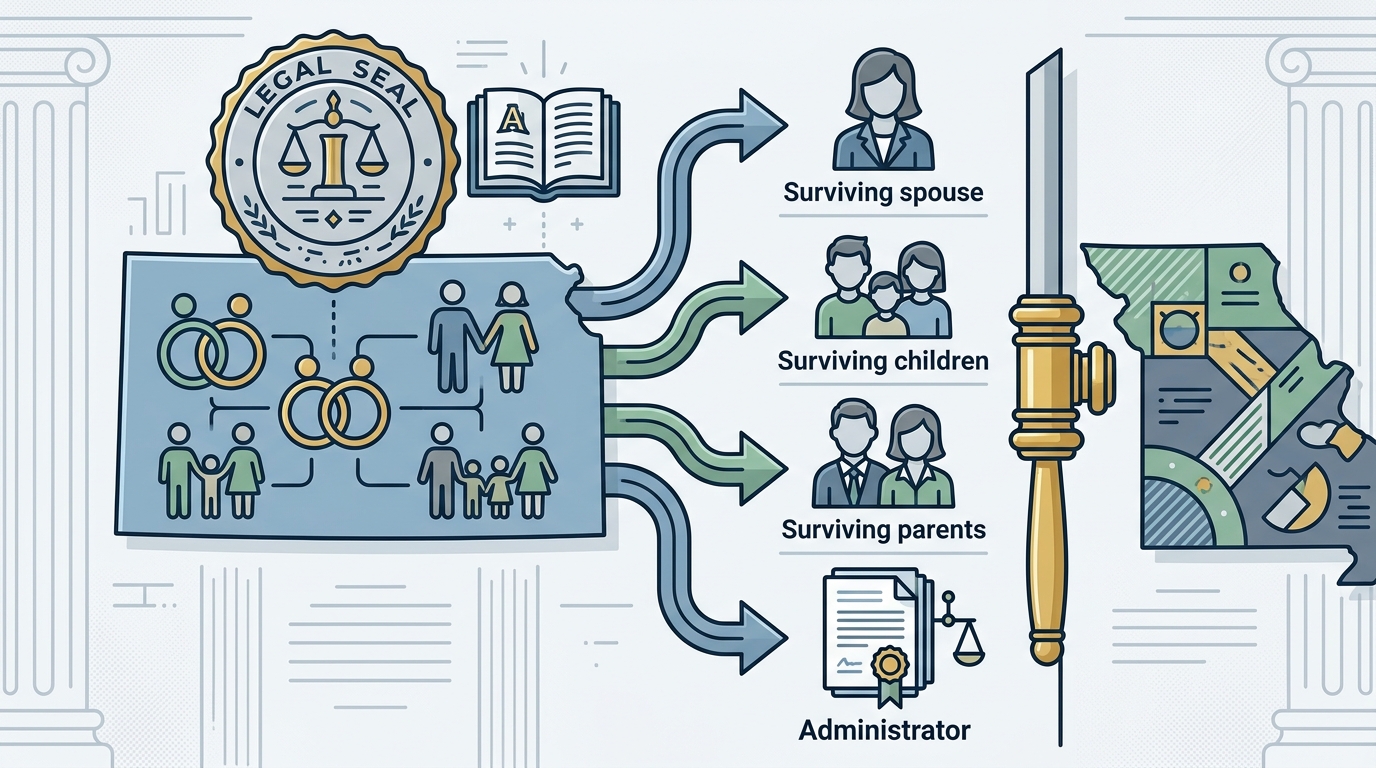
Heirs at law in Kansas typically include the following individuals:
- Surviving spouse of the deceased
- Biological or legally adopted children
- Parents (when the deceased had no surviving spouse or children)
- Siblings (when no spouse, children, or parents survive)
- Grandparents and grandchildren in limited circumstances
- More distant relatives such as first cousins when no closer heirs exist
Who Cannot File
Unmarried partners, stepchildren without legal adoption, and close friends do not qualify as heirs at law. Additionally, if the deceased had a surviving spouse and children, parents and siblings are typically excluded from the heir designation under Kansas intestate succession rules.
The Filing Hierarchy Explained
Kansas law follows the intestate succession order to determine standing. Only one wrongful death lawsuit may be filed per death. Any single heir at law may initiate the case, and other eligible heirs may then intervene.
| Priority Level | Eligible Party | When They May File |
|---|---|---|
| 1 | Surviving Spouse | First in line under intestate succession |
| 2 | Children (biological or adopted) | May file alongside or instead of spouse |
| 3 | Parents | Only if no surviving spouse or children |
| 4 | Siblings | Only if no spouse, children, or parents |
| 5 | Grandparents / More Distant Relatives | Only if no closer heirs exist |
| 6 | Estate Executor | Only if no next of kin are available |
Importantly, any damages awarded benefit all eligible heirs who suffered a loss, even if they did not actively participate in the lawsuit. This is a distinctive feature of Kansas wrongful death law.
Kansas vs. Missouri: Key Differences
Because Kansas City straddles two states, families often need to understand how wrongful death rules differ. Missouri restricts filing rights to a specific statutory order of family members and requires a biological relationship or marriage. Kansas uses the broader "heir at law" framework based on intestate succession.
Standing Comparison
In Missouri, parents can file for a deceased child regardless of custody history. In Kansas, standing depends on whether the person qualifies as an heir under intestate rules, meaning a biological parent who abandoned the child may lack standing. For a deeper look at Missouri's rules, read our guide on who can file a wrongful death lawsuit in Missouri.
Statute of Limitations and Deadlines
The statute of limitations is the legal deadline for filing a lawsuit. In Kansas, wrongful death claims must be filed within two years from the date of death under K.S.A. 60-513(a)(5). Missing this deadline almost always results in permanent dismissal.
Limited exceptions exist, such as the discovery rule in cases where the cause of death was not immediately apparent. Claims involving government entities carry additional procedural requirements under the Kansas Tort Claims Act (K.S.A. 75-6104). Acting quickly is essential, and consulting a Kansas City wrongful death lawyer helps protect your family's rights from the start.
Damages Available in Kansas Wrongful Death Cases
Kansas wrongful death damages fall into two categories: economic and non-economic. Economic damages cover quantifiable losses such as medical bills incurred before death, funeral and burial expenses, lost future income, and loss of household services. There is no cap on economic damages in Kansas.
Non-economic damages compensate for grief, loss of companionship, and emotional suffering. However, Kansas imposes a statutory cap of $250,000 on non-economic damages per wrongful death claim under K.S.A. 60-1903. Kansas also follows a modified comparative negligence rule: if the deceased was 50% or more at fault, the family may be barred from recovery entirely.
The court divides awarded damages among heirs based on factors like the closeness of the relationship and the degree of financial dependence. When families cannot agree, a judge determines the appropriate allocation. For families dealing with insurance bad faith tactics during this process, experienced legal representation is critical.
Key Takeaways
- Kansas law limits wrongful death standing to "heirs at law" as defined by intestate succession rules.
- A surviving spouse, children, parents, and siblings may file depending on the family structure.
- Only one wrongful death lawsuit may be filed, but all eligible heirs benefit from any recovery.
- The statute of limitations is two years from the date of death with very limited exceptions.
- Non-economic damages are capped at $250,000; economic damages have no cap.
- Kansas rules differ significantly from Missouri, which matters for Kansas City area families.
- Consulting an experienced wrongful death attorney early preserves your legal options.
Frequently Asked Questions
Can a parent file a wrongful death lawsuit in Kansas?
Yes, but only if the deceased had no surviving spouse or children. In Kansas, parents qualify as heirs at law only when there are no higher-priority heirs under intestate succession rules.
Can siblings file a wrongful death claim in Kansas?
Siblings may file if there is no surviving spouse, children, or parents. They are lower in the intestate succession hierarchy, so their standing depends on the absence of closer family members.
What is the statute of limitations for wrongful death in Kansas?
Kansas gives families two years from the date of death to file a wrongful death lawsuit under K.S.A. 60-513(a)(5). Missing this deadline typically results in permanent case dismissal.
Is there a cap on wrongful death damages in Kansas?
Yes. Non-economic damages such as grief and loss of companionship are capped at $250,000 under K.S.A. 60-1903. There is no limit on economic damages like lost income and medical expenses.
Can an executor file a wrongful death lawsuit in Kansas?
An executor or estate representative may file only when no next of kin are available to bring the claim. This is uncommon but recognized under Kansas law.
Do all heirs need to join the wrongful death lawsuit?
No. Any single heir at law may initiate the claim. Other heirs may intervene, and all eligible heirs benefit from the recovery regardless of whether they participated in the lawsuit.
How does Kansas wrongful death law differ from Missouri?
Missouri uses a specific statutory list of eligible family members and recognizes biological relationships regardless of custody. Kansas relies on intestate succession rules, which can exclude biological parents who had no legal relationship with the deceased.
What types of deaths qualify for a wrongful death claim in Kansas?
Any death caused by another party's negligence, recklessness, or intentional wrongful act qualifies. Common examples include car accidents, trucking collisions, aviation disasters, and carbon monoxide poisoning.
Get Help From an Experienced Wrongful Death Lawyer
If your family has lost a loved one due to someone else's negligence in Kansas, time is limited. The two-year filing deadline is strict, and insurance companies often move quickly to minimize what they pay. Presley and Presley Trial Lawyers, LLC, a Best Lawyers-recognized Tier 1 firm for Personal Injury Litigation in Kansas City, has the experience to fight for the compensation your family deserves. Kirk Presley and Jill Presley, named 2026 Best Lawyers Aviation Lawyer of the Year, have devoted their careers to catastrophic injury and wrongful death cases.
Contact Presley and Presley Trial Lawyers today at (816) 931-4611 for a free consultation.