

Losing a loved one because of someone else's negligence is devastating, and understanding your legal rights during grief can feel overwhelming. Kansas law limits who may bring a wrongful death lawsuit to specific individuals defined by statute. If your family has suffered a fatal loss caused by a truck accident, aviation crash, carbon monoxide poisoning, or any other act of negligence in or around Kansas City, knowing whether you have legal standing is the critical first step toward accountability. This guide explains exactly which individuals Kansas law authorizes to file a wrongful death claim, the statutory framework behind that authority, and how an experienced attorney can help protect your family's rights.
What Is Wrongful Death Under Kansas Law?
A wrongful death is a death caused by the wrongful act, neglect, or omission of another person or entity. Under K.S.A. 60-1901, a wrongful death claim can be brought whenever the deceased person could have pursued a personal injury lawsuit had they survived. The statute applies to fatalities caused by negligence, recklessness, or intentional misconduct.
Common scenarios that give rise to wrongful death claims include car and semi-truck accidents, helicopter and airplane crashes, carbon monoxide poisoning incidents, and catastrophic injuries that prove fatal. The claim may be filed against the at-fault party or, if that party is also deceased, against their estate's personal representative.
Who Qualifies as an "Heir at Law" in Kansas?
An heir at law is a person entitled to inherit from the deceased under Kansas intestate succession laws. This means the individual would receive a share of the estate if the deceased died without a valid will. Kansas does not use the term "personal representative" to define the filing party in wrongful death actions the way some other states do.
Importantly, a biological relationship alone is not enough. The filing party must also demonstrate that they sustained an actual loss because of the death. Kansas courts have held that if the only relationship is biological and no real harm exists, standing may be denied.
How Kansas Differs From Missouri
Missouri restricts wrongful death filings to a statutory hierarchy of specific family members, beginning with the spouse, children, or parents. Kansas takes a broader approach by allowing any heir at law to file, but requires proof of loss. Families in the Kansas City metro area should confirm which state's law applies, because the distinction affects who may bring suit. The wrongful death attorneys at Presley and Presley Trial Lawyers are licensed in both Missouri and Kansas and can advise on jurisdictional questions.
Specific Family Members Authorized to File
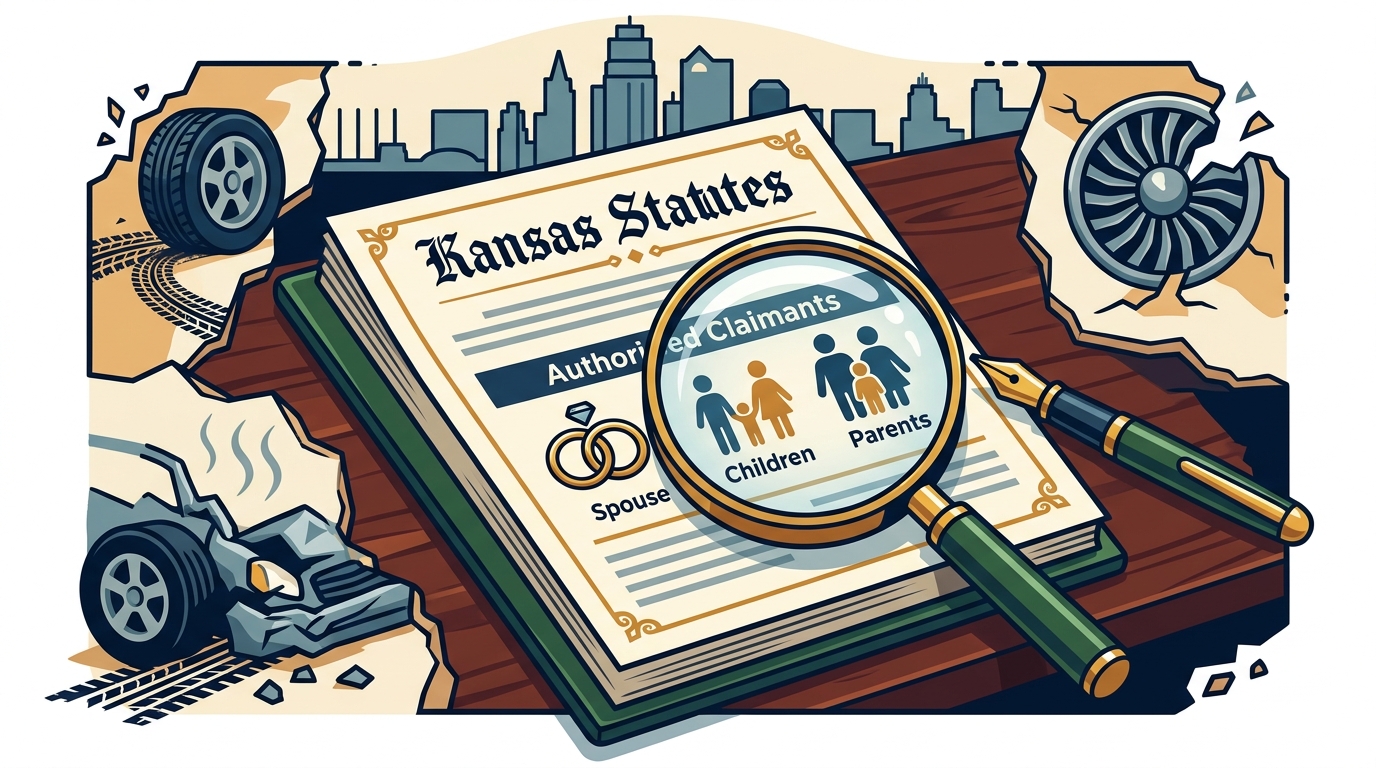
Under K.S.A. 60-1902, any heir at law of the deceased who has sustained a loss by reason of the death may commence the wrongful death action. In most cases, the following family members have standing:
| Eligible Party | Typical Relationship | Conditions |
|---|---|---|
| Surviving Spouse | Husband or wife | Must show loss resulting from the death |
| Children | Biological or legally adopted | Must show loss; minor children may file through a guardian |
| Parents | Mother or father | Eligible when no surviving spouse or children exist, or when they can prove loss |
| Siblings | Brothers or sisters | Not heirs at law while parents are alive |
| Grandparents / Grandchildren | Extended family | May qualify in the absence of closer heirs |
| Estate Executor | Court-appointed representative | May file only if no next of kin are available |
Kansas case law clarifies that siblings are generally not considered heirs at law while the deceased's parents are still living. Similarly, a parent whose parental rights have been severed cannot file on behalf of the deceased child.
The One-Lawsuit Rule and Intervention Rights
Kansas permits only one wrongful death lawsuit per decedent. Any single heir at law may initiate the action, but all other eligible heirs who have also sustained a loss are entitled to intervene. The statute states that the action is for the exclusive benefit of every heir who suffered a loss, regardless of whether they formally joined the lawsuit.
This means damages recovered through the case are distributed among all qualifying heirs. If the heirs cannot agree on how to divide the recovery, a judge will apportion the proceeds based on the circumstances of each heir's relationship with the deceased and the losses they sustained.
Wrongful Death vs. Survival Actions
A survival action is a related but distinct legal claim that covers the period between the initial injury and the victim's death. While a wrongful death claim compensates surviving family members for their losses, a survival action allows the deceased's estate to recover damages the victim would have been entitled to had they lived.
Only the appointed representative of the decedent's estate has authority to bring a survival action. These two claims are often filed together, but they serve different purposes and compensate different parties. Families dealing with fatal boating, ATV, or other recreational accidents should discuss both options with counsel.
Kansas Statute of Limitations for Wrongful Death
Kansas imposes a strict two-year deadline to file a wrongful death lawsuit. Under K.S.A. 60-513(a)(5), the clock begins on the date of the person's death. If the claim is not filed within two years, the court will almost certainly refuse to hear the case.
Special rules apply when a government entity or employee caused the death. The Kansas Tort Claims Act (K.S.A. 75-6104) introduces additional exceptions and notice requirements that can shorten the effective filing window. Acting quickly and consulting an attorney as soon as possible is essential to preserving your rights.
Why Timing Matters in Catastrophic Cases
Evidence in wrongful death cases involving truck collisions, aviation disasters, or gas explosions can deteriorate rapidly. Electronic logging device data from semi-trucks, cockpit voice recordings, and physical evidence at a carbon monoxide exposure site may be lost if not preserved promptly. Presley and Presley Trial Lawyers, a firm recognized by Best Lawyers as a Tier 1 Kansas City firm for Personal Injury Litigation (Plaintiffs) in 2026, prioritizes immediate investigation and evidence preservation in every case.
Key Takeaways
- Kansas law limits wrongful death filings to "heirs at law" of the deceased who have sustained an actual loss.
- Common eligible parties include the surviving spouse, children, parents, and in some cases siblings, grandparents, or grandchildren.
- Only one wrongful death lawsuit may be filed per decedent, but other heirs may intervene.
- Any recovery benefits all eligible heirs, even those who did not formally join the suit.
- The statute of limitations is two years from the date of death with no general exceptions for late discovery.
- Survival actions are separate claims brought by the estate's representative for damages accrued before death.
- Consulting a wrongful death attorney promptly protects both your standing and critical evidence.
Frequently Asked Questions
Can a spouse file a wrongful death lawsuit in Kansas?
Yes. A surviving spouse is typically the first heir at law eligible to file a wrongful death claim in Kansas, provided they can demonstrate a loss resulting from the death.
Can parents file a wrongful death claim for their child in Kansas?
Parents may file if they qualify as heirs at law and can show they sustained a loss. However, if the deceased child had a surviving spouse or children, the parents may not be considered heirs at law for filing purposes.
Do siblings have standing to file in Kansas?
Generally, siblings are not heirs at law while the deceased's parents are still alive. If no parents, spouse, or children survive, siblings may qualify.
Can an executor or estate administrator file a wrongful death lawsuit?
An executor does not automatically gain the right to file a wrongful death claim. However, if no next of kin are available, the executor may file on behalf of the estate.
What is the deadline to file a wrongful death lawsuit in Kansas?
The statute of limitations is two years from the date of death under K.S.A. 60-513(a)(5). Missing this deadline typically results in permanent loss of the right to sue.
Does Kansas follow comparative negligence in wrongful death cases?
Yes. Kansas applies a modified comparative negligence rule. You can recover damages only if the deceased was less than 50% at fault. Compensation is reduced by the deceased's percentage of fault.
Can I file a wrongful death lawsuit and a survival action at the same time?
Yes. These are separate legal claims that are frequently pursued together. The wrongful death claim compensates heirs, while the survival action compensates the estate for pre-death damages.
How are wrongful death damages divided among family members in Kansas?
If the heirs agree, they may divide damages by mutual consent. If they cannot agree, the court will apportion the recovery based on each heir's relationship with the deceased and the losses they individually sustained.
Speak With a Kansas City Wrongful Death Attorney
If you have lost a loved one due to negligence in a truck accident, aviation crash, carbon monoxide incident, or any other preventable tragedy, the attorneys at Presley and Presley Trial Lawyers, LLC can help you understand your rights under Kansas law. Named among the Best Law Firms in America by Best Lawyers with Tier 1 rankings in Personal Injury Litigation, Aviation Law, and Insurance Litigation for Kansas City in 2026, the firm brings over 40 years of trial experience and a proven record that includes a $30 million wrongful death recovery. Kirk Presley and Jill Presley both hold 2026 Best Lawyers individual recognition, and Jill Presley was named Aviation Lawyer of the Year for 2026. Contact Presley and Presley Trial Lawyers today at (816) 931-4611 for a free consultation.